
ROME: MY FAVOURITE PLACE IN THE WORLD

There are cities I like, cities I admire and cities I would happily return to. And then there is Rome.
Rome has never occupied the same category for me.
I love it with the completely unreasonable attachment normally reserved for people, not places. I can criticise it, complain about it, point out everything that does not work and still become absurdly happy the moment I see a Roman street, an ochre wall, a pine tree or a piece of travertine in a photograph.
Part of that comes from the obvious thing: the history. But Rome is not fascinating because it has old buildings. Plenty of places have old buildings. Rome is fascinating because the past was never properly cleared away.
Everything is sitting on top of something else.
A Renaissance palace incorporates an ancient wall. A medieval church occupies an earlier Roman building. A Baroque façade hides a much older structure. A perfectly ordinary street suddenly reveals a column that has been standing there for nearly two thousand years.
The city does not present history neatly, period by period. It piles everything together and expects you to deal with it.

That layering is probably what I love most.
Rome never feels like a historical reconstruction. It is too messy for that. People park scooters against ancient masonry, hang washing near buildings that appear in art-history books and drink coffee a few metres away from things other cities would probably place behind several barriers and an admission desk.

And then there is the colour.
Rome does not really belong to white marble, despite the way antiquity is often photographed. My Rome is warm stone, faded terracotta, dusty pink, yellow plaster, dark green shutters, cypress trees, umbrella pines and that peculiar late-afternoon gold that makes almost everything look more expensive than it actually is.

I also love Roman interiors and courtyards for the same reason. They very rarely feel designed from scratch. They feel accumulated.
A marble table may sit beside a contemporary chair. An eighteenth-century mirror reflects a modern lamp. A courtyard has fragments of sculpture, enormous plants, worn stone and something completely mundane tucked into a corner. There is beauty, but not the anxious kind of beauty where everything has been arranged for a photograph.


None of this means Rome is an easy city. It absolutely is not.
It can be noisy, chaotic, dirty, badly organised and infuriating. Things close when you finally arrive. Transport develops its own philosophy. Something you desperately want to see is inevitably under restoration.
I love it anyway. Possibly partly because of that.

A perfectly polished Rome would probably be unbearable. The cracks are part of it. The city has been rebuilt, abandoned, reused, looted, restored and altered for centuries. Expecting it suddenly to become orderly feels almost disrespectful.

That may be why I keep returning to Rome for inspiration when thinking about homes and gardens too.
It reminds me that beautiful spaces do not need to be sterile. They need layers. Objects with history. Plants allowed to become enormous. Stone that shows its age. Things collected because somebody loved them, rather than because they matched.

Perhaps that is ultimately what Rome represents for me.
Not perfection.
Continuity.
People have lived, built, decorated, planted, ruined and rebuilt there for thousands of years. Every generation has left something behind, sometimes beautiful and sometimes disastrous, and the city has somehow absorbed all of it.

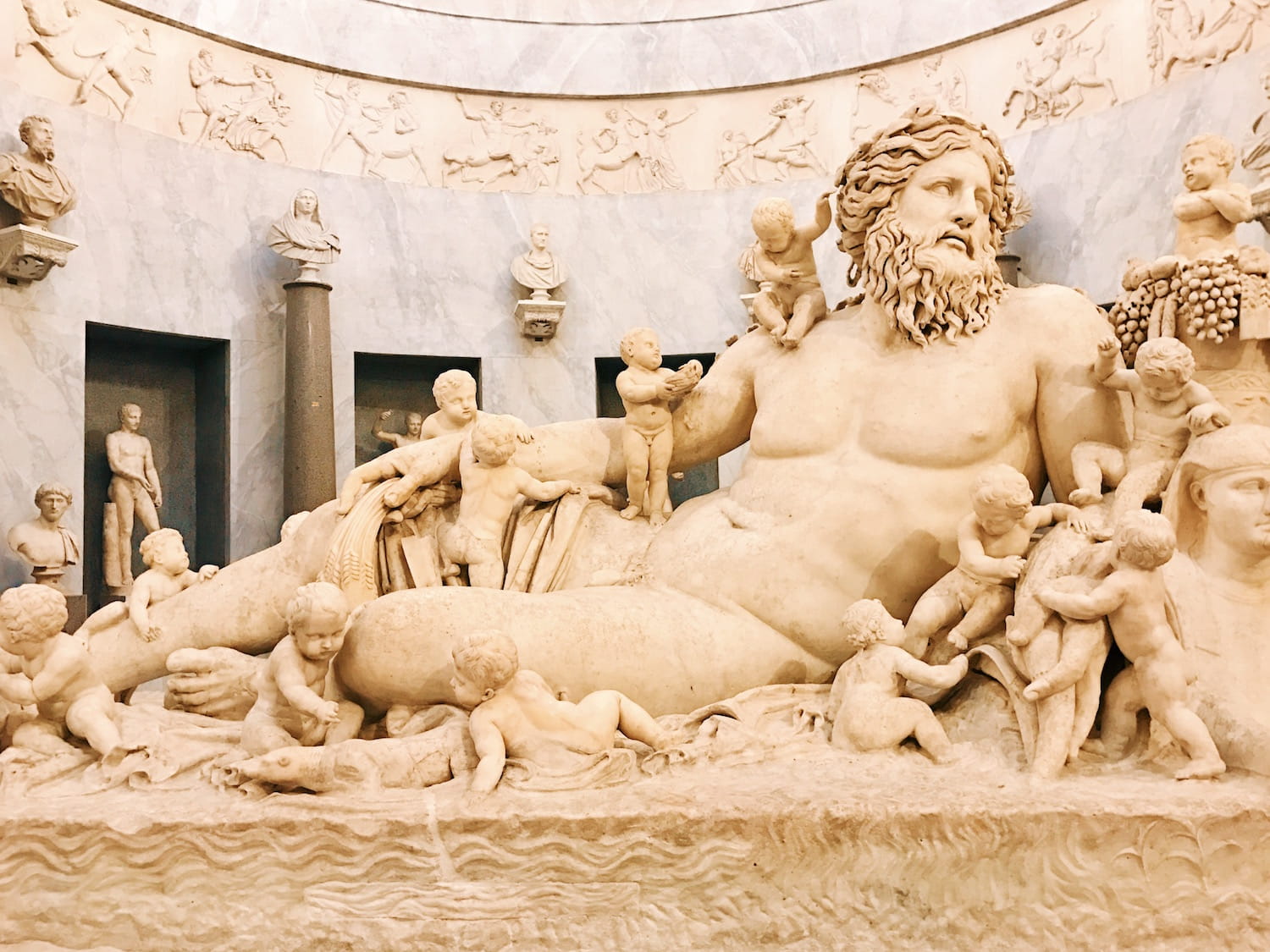
I could probably make a list of a million things I love about Rome.
But if I had to reduce it to one, it would be this: Rome makes the passing of time visible, and somehow makes that feel beautiful rather than sad.


.jpg)
.gif)


.jpg)
.jpg)
%2Bcopy.jpg)

0 comments